


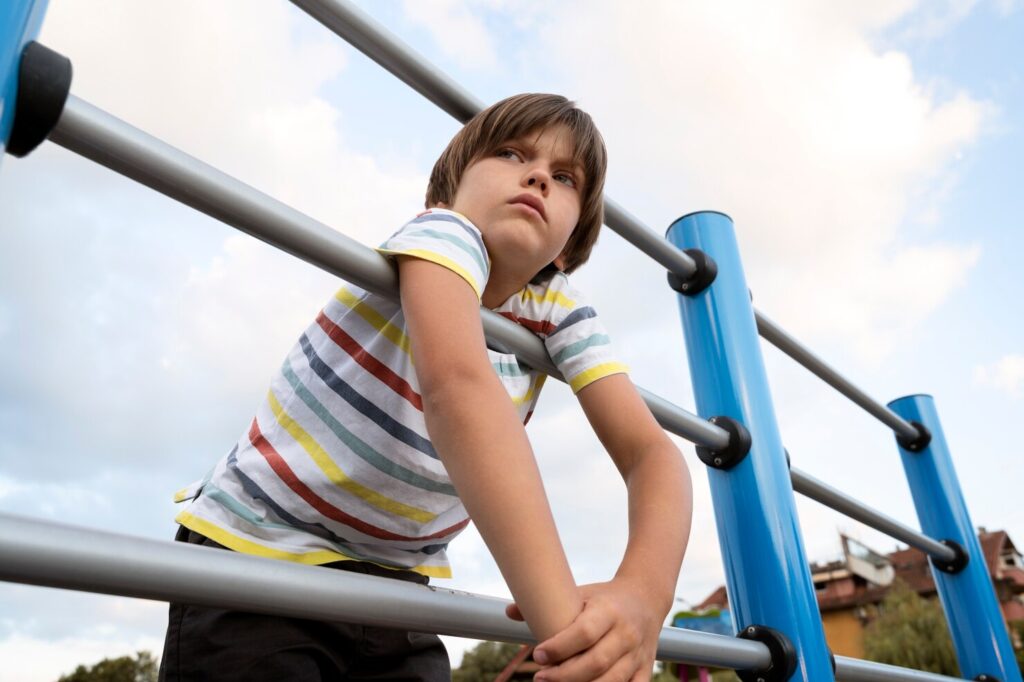
When parents hear “core strength,” they usually think of sport. A child who is good at gymnastics, swimming, or cricket. A strong core as an athletic asset.
But core strength in children matters far beyond sport. It is the foundation of sitting at a desk without slumping, holding a pencil for long enough to write, maintaining attention during a class, and managing the physical demands of daily routines. For children with developmental delays, sensory processing difficulties, or autism, a weak core can be one of the key barriers standing between them and functional independence.
What Is Core Strength in Children?
The core is not just the abdominal muscles. In children, core strength refers to the strength and coordination of all the muscles around the trunk, spine, hips, and shoulders that work together to provide a stable base for movement.
When a child’s core is strong and well-coordinated, they can sit upright without leaning on a desk, reach across the midline of their body, maintain a stable posture during fine motor tasks, and sustain physical activity without fatiguing quickly. When the core is weak or poorly coordinated, all of these tasks become harder.
Low muscle tone, sometimes called hypotonia, is common in children with Down syndrome, developmental delays, and some other conditions. Even children without a diagnosis can have core weakness that significantly affects their performance at school and in daily activities.
How Core Strength Affects Learning and Daily Life
Core weakness is one of the most commonly overlooked causes of poor school performance and daily fatigue in children.
A developmental assessment at 7 Senses identifies whether core strength is a factor and builds a targeted programme to address it.
Book an assessment for your child in Ahmedabad. Speak to our team here.
Sitting and posture
A child who cannot maintain an upright sitting position without support is using significant energy just to stay in their chair. This leaves less energy available for attending to the teacher, processing information, and producing written work. Children with poor core stability are often labelled as inattentive when the underlying issue is physical.
Handwriting
Good handwriting requires a stable shoulder and arm position, which depends on core stability. A child who cannot hold their trunk steady cannot hold their arm steady, and their handwriting suffers as a result. Our handwriting skills training programme works on these postural foundations alongside the specific mechanics of letter formation.
Attention and concentration
When a child has to concentrate on maintaining their physical position, they have fewer cognitive resources available for learning. This is why core strengthening activities often produce noticeable improvements in classroom behaviour and attention, not because they directly address attention, but because they remove the physical demand that was competing with it.
Gross motor skills
Balance, coordination, running, jumping, and climbing all depend on core stability. Children with core weakness often avoid physical play not because they are disinterested but because it is harder and more tiring for them than for peers. Our physiotherapy programme addresses gross motor development alongside core work for children who need both.
Self-care and daily activities
Getting dressed, managing a backpack, eating at a table, and many other daily activities require postural stability and strength. Children with core weakness often take longer to become independent in these tasks and may need specific support to develop them.
What Is the Core Development Programme (CDP)?
The Core Development Programme at 7 Senses is a holistic intervention designed specifically for children facing developmental, neurological, or behavioural challenges. It is not a gym class. It is a structured therapeutic programme that addresses cognitive, social, behavioural, language, and emotional development together, with core physical development as a key foundation.
CDP is distinct from standard occupational therapy or physiotherapy because it takes an integrated approach. Rather than addressing one domain at a time, it works across multiple areas simultaneously. A single CDP session might involve activities that build postural strength, develop attention, practise sequencing, and build social skills all at once, because these areas of development are interconnected and progress faster when addressed together.
CDP is particularly well suited to children who have needs across multiple developmental areas: those with autism, ADHD, developmental coordination disorder, Down syndrome, or global developmental delays.
Core Strengthening Activities for Children
While the CDP provides a structured, professionally designed programme, there are activities parents can do at home to support core development:
- Animal walks: Bear walks, crab walks, and donkey kicks require the child to support their body weight through their core and limbs. They are highly effective and most children find them fun.
- Sitting on an unstable surface: A wobble cushion or therapy ball challenges the core constantly during seated activities. Even using one during homework time builds core stability passively.
- Carrying activities: Carrying a weighted bag, a pile of books, or a laundry basket builds core and postural strength while also providing the proprioceptive input many children seek.
- Wall push-ups: Pressing hands flat against a wall and doing slow push-ups against it strengthens the shoulder girdle and core simultaneously. Excellent before seated tasks.
- Tummy time: For younger children, time spent lying prone (on their tummy) builds the back extensors and shoulder muscles that underpin later postural control.
- Climbing and hanging: Climbing frames, monkey bars, and hanging activities are among the most effective core builders for school-age children. They are also highly motivating.
For a broader range of activities that support physical and sensory development at home, our article on occupational therapy at home covers many approaches that complement core work.
How the CDP Fits With Other Therapies
The Core Development Programme is designed to work alongside other therapies rather than replace them. A child receiving occupational therapy and ABA therapy can also attend CDP sessions, and the team coordinates goals across all three so that each therapy is reinforcing the others.
For children who also need speech support, our speech therapy programme can be integrated into the same overall plan. The CDP team at 7 Senses coordinates with all other therapists involved in the child’s care.
Frequently Asked Questions
Q: At what age should a child start core development work?
Core development activities can begin in infancy through tummy time and supported play. Formal assessment of core strength and a structured programme like CDP is typically appropriate from age 2 to 3 onwards, though this depends on the individual child.
Q: How do I know if my child has core weakness?
Signs include: consistently slumping or leaning when sitting, poor endurance during physical activity, difficulty with handwriting despite adequate fine motor skills, avoiding activities that require postural control, and taking much longer than peers to dress or manage self-care tasks. A physiotherapy or OT assessment will identify core weakness formally.
Q: Is the Core Development Programme only for children with diagnoses?
No. CDP is appropriate for any child who is significantly behind in developmental milestones or who has multiple areas of difficulty that are affecting their daily functioning. A diagnosis is not required to access the programme.
Q: How long does the CDP run for?
This depends on the individual child’s goals and starting point. Some children reach their goals within 6 to 12 months. Others with more complex needs may benefit from longer-term involvement. Progress is reviewed regularly and the programme adjusts accordingly.
Conclusion
Core strength in children is not about sport. It is about giving every child the physical foundation they need to sit, learn, write, and participate in daily life without being held back by their body.
If you are concerned about your child’s core strength, posture, or overall physical development, contact 7 Senses in Ahmedabad to learn about our Core Development Programme and whether it is right for your child.