

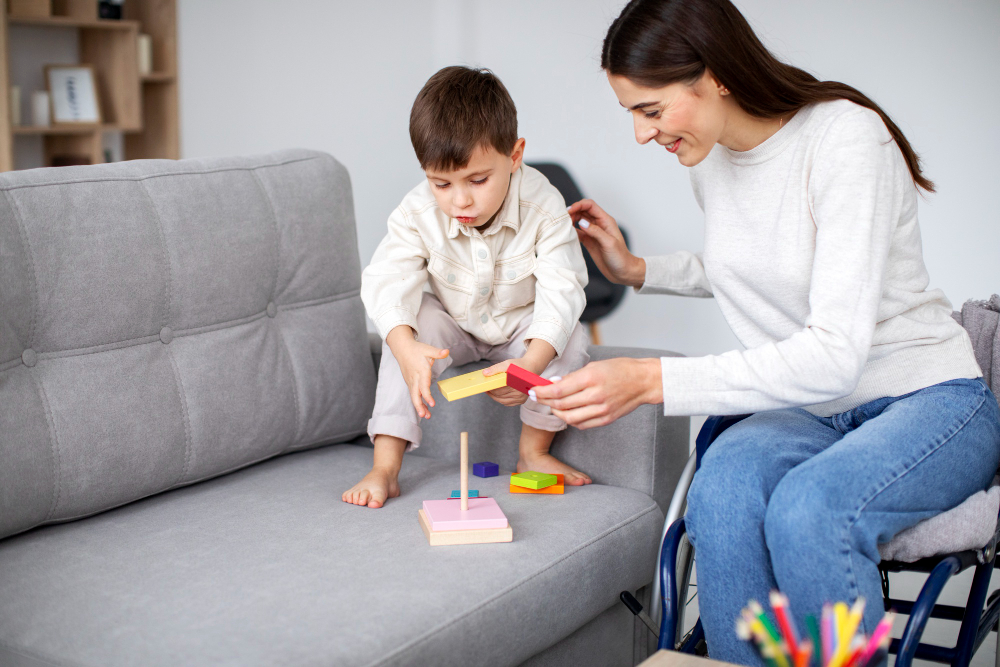
Therapy does not end when your child leaves the clinic.
In fact, what happens between sessions, the daily habits, the small practice moments, the way you respond when your child struggles, often matters more than the one hour a week with a therapist.
This guide is for parents who want to understand occupational therapy at home: what it means, why it works, and how to do occupational therapy at home without it feeling like another stressful task on an already full day.
What Does Occupational Therapy at Home Mean?

Occupational therapy at home is simply about carrying OT principles and activities into everyday life. It does not mean setting up a formal therapy session in your living room. It means understanding what your child is working on and finding small ways to support that within normal daily routines.
Your child’s therapist will guide you specifically based on their assessment. Most Occupational therapy programmes involve some combination of:
- Fine motor skill development
- Sensory regulation strategies
- Self-care skill practice
- Visual motor activities
- Gross motor play
How to Do Occupational Therapy at Home
Start with a clear goal
Before picking activities, it helps to know what your child is working towards. If their therapist has given you a home programme, use that as your guide. If you are supporting your child without a therapist’s input yet, focus on one area at a time, such as handwriting, dressing, or sensory tolerance.
Build activities into existing routines
The most sustainable approach is not adding separate therapy time to your day. It is looking at what already happens, such as morning routines, mealtimes, playtime, and bath time, and seeing where Occupational activities naturally fit.
Breakfast time: Let your child pour their own cereal or spread butter on toast. These simple acts build bilateral coordination and grip strength.
Bath time: Filling and emptying cups, squeezing sponges, and playing with foam letters are all fine motor activities.
Getting dressed: Give your child time to manage buttons, zips, and laces independently. The frustration is part of the learning.
Keep sessions short
Fifteen minutes of focused occupational therapy activity is usually more effective than an hour of unfocused effort.
Make it play
Children do not distinguish between therapy and play. If an activity feels fun, they will engage willingly and repeatedly. The repetition is where the learning happens.
Occupational Therapy at Home for Autism
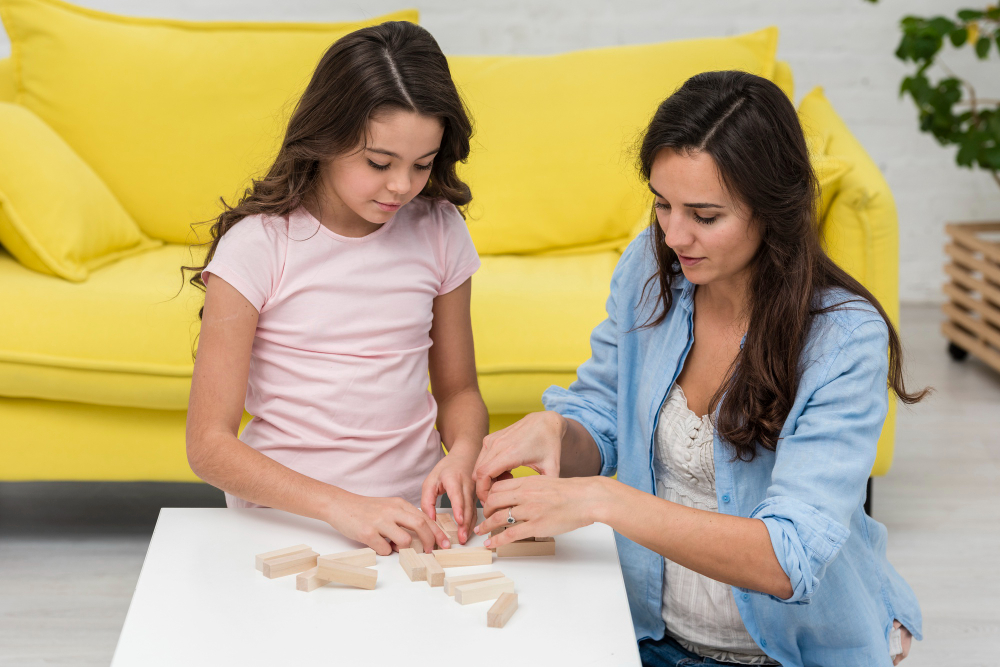
Children with autism often have a different sensory profile from neurotypical children. Home occupational therapy for autistic children typically focuses on:
Sensory diet activities
A sensory diet is a personalised schedule of sensory activities throughout the day that help a child stay regulated. Your child’s occupational therapy will build one based on their specific sensory profile. Common items include:
- Morning: Jumping on a mini trampoline before school
- Mid-morning: Heavy work such as carrying a backpack with some weight or doing wall push-ups
- After lunch: Quiet time with a weighted lap pad
- Evening: Bath with warm water and foam play
Calming strategies
Teach your child to recognise when they are getting overwhelmed and give them a reliable strategy to use. Deep pressure, firm hugs, rolling up in a blanket, works for many children. Some prefer movement: rocking, swinging, spinning. Work with your therapist to identify what regulates your child.
Occupational Therapy Activities at Home for Autism: Practical Examples
Proprioceptive input: Wheelbarrow walking (parent holds child’s legs while child walks on hands), carrying weighted grocery bags, pushing a loaded laundry basket.
Tactile desensitisation: Finger painting with different textures, hand-in-dry-rice, shaving foam play on a tray.
Visual motor: Dot-to-dot drawings, tracing activities, jigsaws appropriate for age.
Oral motor: Drinking thick liquids through a straw, blowing bubbles, chewing on appropriate chewy tools.
Common Occupational Therapy Activities at Home for Different Age Groups
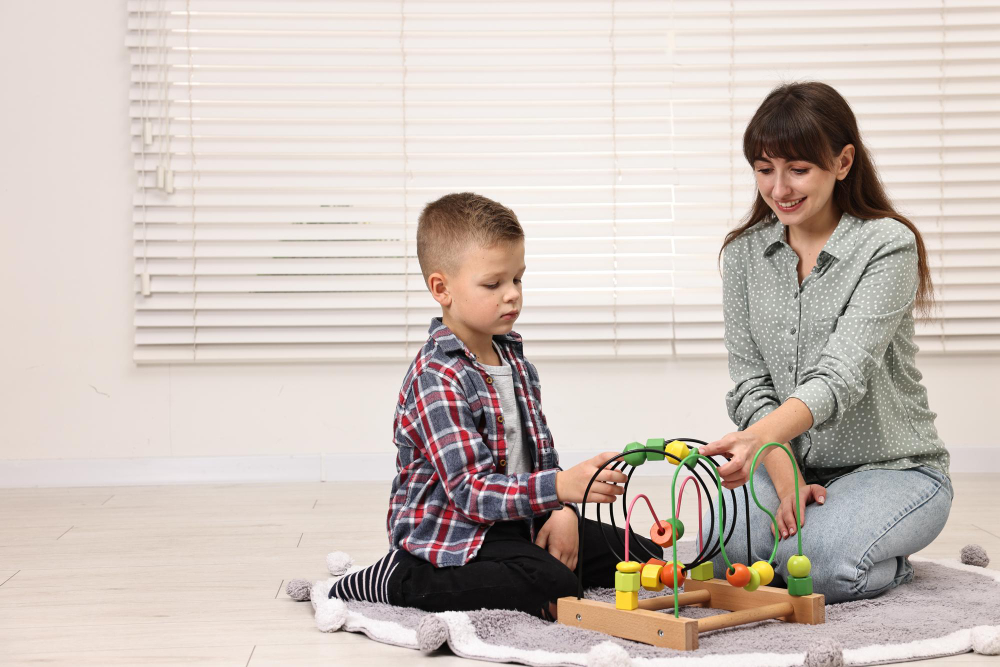
Toddlers (1 to 3 years):
- Stacking cups and knocking them down
- Tearing soft paper into strips
- Finger painting in a ziplock bag (mess-free)
- Squeezing bath toys
Preschool (3 to 5 years):
- Playdough with tools
- Simple puzzles
- Using child scissors to cut playdough or soft paper
- Lacing cards
School age (5 to 12 years):
- Origami and paper folding
- Knitting or weaving boards
- Building with LEGO
- Simple cooking and baking tasks
What Parents Often Get Wrong
Doing too much at once
Pick one or two activities per week and repeat them. Children need to practise the same skill many times before it transfers.
Expecting linear progress
Children often seem to plateau or even regress before they consolidate a skill. A week where your child seems to have forgotten what they knew is often followed by a leap forward.
Stopping when the child resists
Mild resistance is normal, especially with sensory activities. But this is different from genuine distress. A therapist can help you read the difference.
Not communicating with the therapist
Your observations at home are valuable. If an activity is consistently going badly, or if you have noticed your child responding well to something unexpected, tell your therapist. It will help them adjust the programme.
When Occupational Therapy at Home Is Not Enough
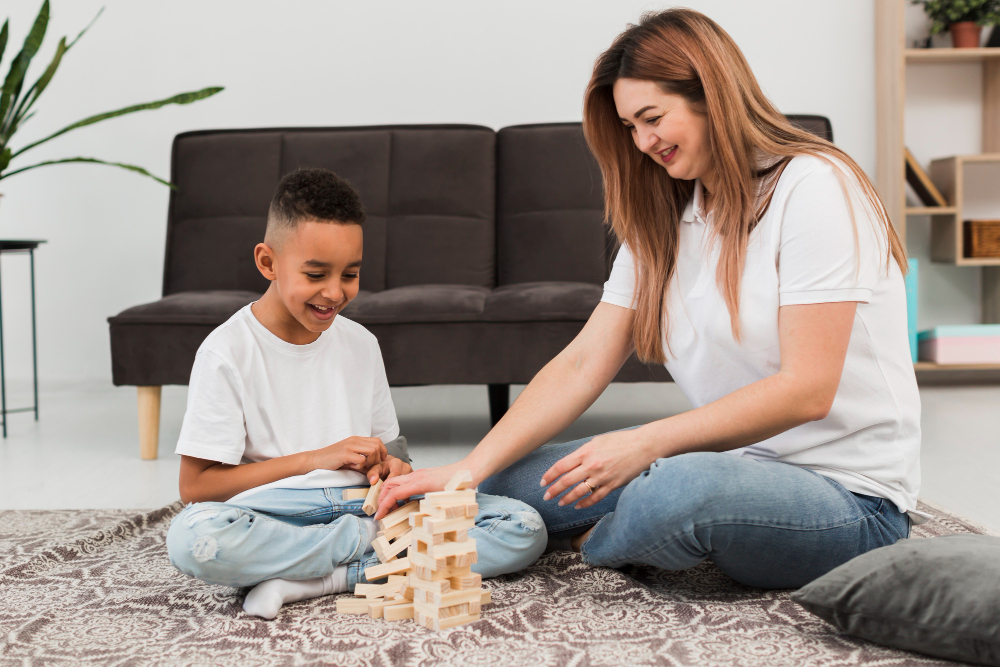
Home activities support a therapy programme, they do not replace it. If your child has significant developmental concerns, a formal occupational therapy assessment gives you a clear picture of where they are and what they need.
Our blog on the importance of occupational therapy in Ahmedabad for child development covers why professional occupational therapy matters, especially in the early years.
At 7 Senses Paediatric Rehabilitation Centre, we offer occupational therapy in Ahmedabad for children with a wide range of needs. Our parents training and home plans are designed to give you exactly the kind of guided home programme that gets results.
Frequently Asked Questions
Q: How many times a week should I do occupational therapy activities at home with my child?
Daily is ideal, even if only for 10 to 15 minutes. Short and consistent beats long and occasional.
Q: My child refuses to do the activities. What should I do?
Start with what your child already enjoys and gradually incorporate therapeutic elements. Never force an activity that causes genuine distress.
Q: Can I do occupational therapy at home without seeing a therapist first?
You can certainly do many general developmental activities at home. But for children with specific diagnoses or significant delays, an occupational therapy assessment will tell you exactly what activities will be most useful.
Q: How long before we see results?
Most parents notice small improvements within 4 to 6 weeks of consistent practice. Significant changes in skills typically take 3 to 6 months.
Conclusion
Occupational therapy at home works. Not as a replacement for professional therapy, but as a powerful complement to it. Start small. Be consistent. Reach out to a professional if you are unsure where to begin.