



Every parent of a child with speech or communication difficulties reaches a point where they ask the same question: what can I actually do to help?
The answer, in part, comes down to the right speech therapy tools. Speech therapy is not just about talking in a room with a therapist. It involves structured techniques, specific assessment methods, and a range of materials that help children find their voice, sometimes quite literally.
This guide covers the most useful speech therapy tools across different contexts: clinical assessment, therapy sessions, autism support, and home practice.
What Are Speech Therapy Tools?

Speech therapy tools are the instruments, materials, and methods that speech-language pathologists use to assess and support children’s communication. They range from formal standardised tests to everyday items like picture cards, mirrors, and apps.
The tools a therapist selects depend on the child’s age, diagnosis, and specific communication goals. A non-verbal autistic child will need very different tools from a child who stutters or one who has delayed expressive language.
Speech and Language Therapy Assessment Tools
Before a therapist can build an intervention plan, they need to understand exactly where a child is struggling. That is where formal assessment tools come in.
Receptive and Expressive Language scales
Tools like the REELS (Receptive-Expressive Emergent Language Scale) or the PLS (Preschool Language Scales) help therapists measure how much language a child understands versus how much they can produce. Many children have a significant gap here.
GFTA (Goldman-Fristoe Test of Articulation)
This is widely used to assess a child’s ability to produce specific speech sounds in words and sentences. It gives therapists a clear picture of which sound errors need targeting.
ISAA (Indian Scale for Assessment of Autism)
This is specifically designed for the Indian population and cultural context. For a detailed explanation of the ISAA, its age range, and how it is used.
Informal language samples
Experienced therapists often gather a 10 to 15-minute language sample during free play, then analyse it for mean length of utterance, vocabulary diversity, and communication functions. This sometimes tells you more than a formal test.
Best Speech Therapy Tools for Clinic Sessions
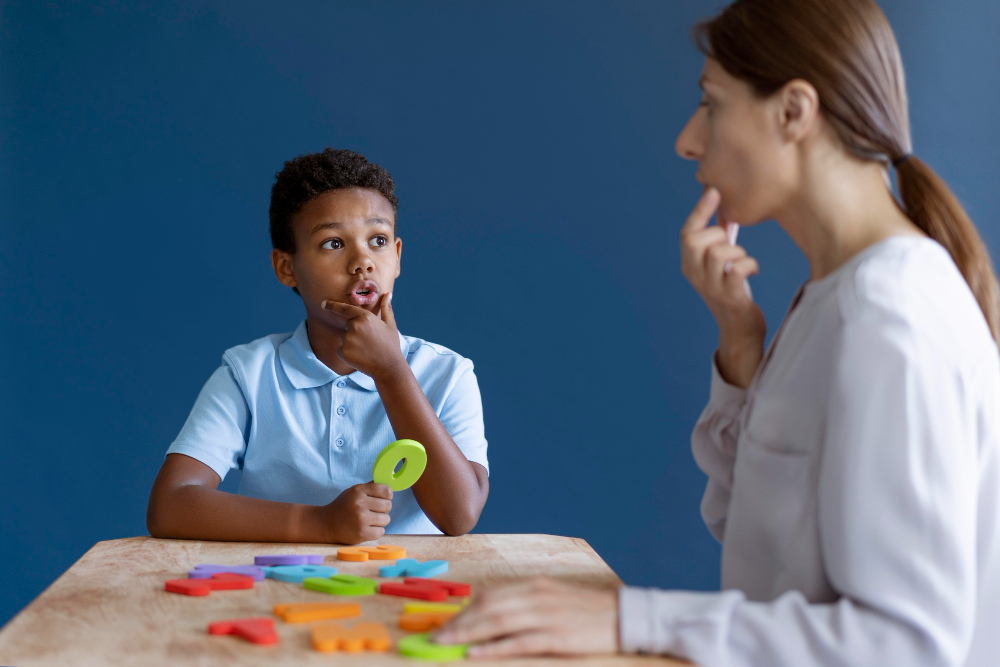
Picture Exchange Communication System (PECS)
PECS is a widely used AAC (Augmentative and Alternative Communication) system. Children learn to exchange picture cards to communicate wants and needs. It is particularly valuable for children who are non-verbal or minimally verbal. PECS has a solid evidence base for supporting communication in autistic children.
Communication boards and low-tech AAC
A simple laminated board with pictures of food, activities, emotions, and common words gives a child a way to communicate even before formal language develops. These are inexpensive to create and powerful in practice.
High-tech AAC devices and apps
Apps like Proloquo2Go, TouchChat, and Cboard run on tablets and give children a digital voice. Many autistic children take to technology naturally, making high-tech AAC a good option when resources allow.
Flashcards and object-word matching sets
These are staples of early language therapy. Well-designed sets include high-frequency words, verbs (action words), and emotion faces.
Oral motor tools
Chewy tubes, vibrating devices, and Ark Therapeutic tools support oral motor development. Children with low muscle tone in the mouth area often benefit from structured oral motor work before or alongside speech exercises.
Barrier games
Therapists on opposite sides of a barrier take turns giving and following instructions to place objects on a picture scene. These build descriptive language and listening skills in a genuinely fun format.
Speech Therapy Tools for Autism
Children with autism often have very specific communication needs. The tools that work best tend to be predictable, visual, and low-pressure.
Visual schedules
A picture-based daily schedule reduces anxiety about transitions and builds vocabulary for time-related concepts (first, then, after). Children who struggle to communicate about upcoming events often become less distressed when they can see the plan.
Social stories
Social stories are short illustrated scripts that walk a child through a social situation before it happens, such as going to a birthday party, visiting a doctor, or starting school. They prepare the child linguistically and emotionally.
Video modelling
Children watch a short video of someone else completing a social or communicative behaviour, then practise it themselves. Research supports video modelling as effective for autistic children working on greetings, play, and conversation skills.
Token economy boards
A visual reward system where a child earns tokens towards a preferred activity. These help structure therapy sessions and motivate communication attempts.
For children with autism, speech therapy tools work best as part of a combined approach. Our ABA therapy and speech therapy work together to support communication development.
Tools for Speech Therapy at Home
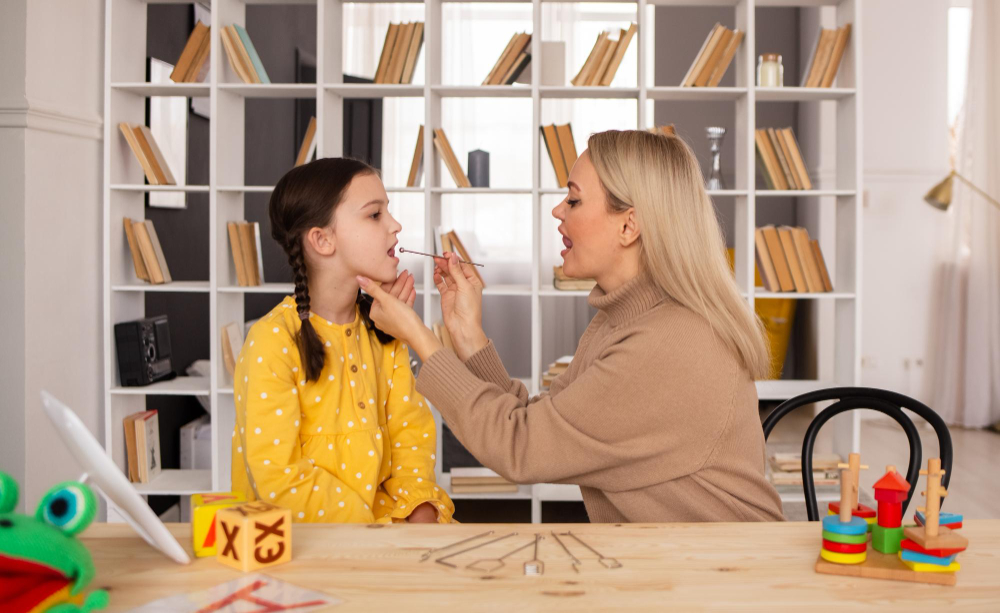
Picture books and shared reading
Reading together daily is one of the most consistently supported activities for language development. Looking at pictures, narrating what is happening, and responding to the child’s attempts to communicate is therapeutic in itself.
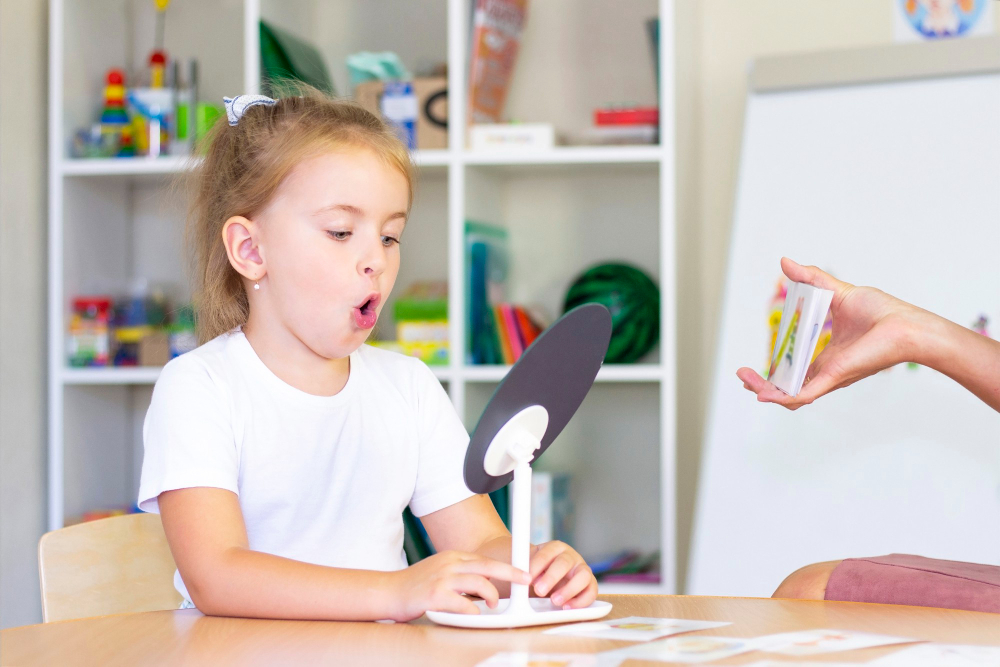
Mirror work
A large unbreakable mirror placed at child height lets children see their mouth movements while they practise sounds. This is particularly helpful for articulation work.
Bubbles
Blowing bubbles builds oral motor strength, breath control, and turn-taking, all relevant to speech development. Most children find bubbles inherently motivating.
Simple games
Games like Snap, Go Fish, or Lotto require children to name cards, ask for items, or describe pictures. The social demand of a game also encourages communication in a way that drills do not.
Finding the Right Speech Therapy Centre in Ahmedabad
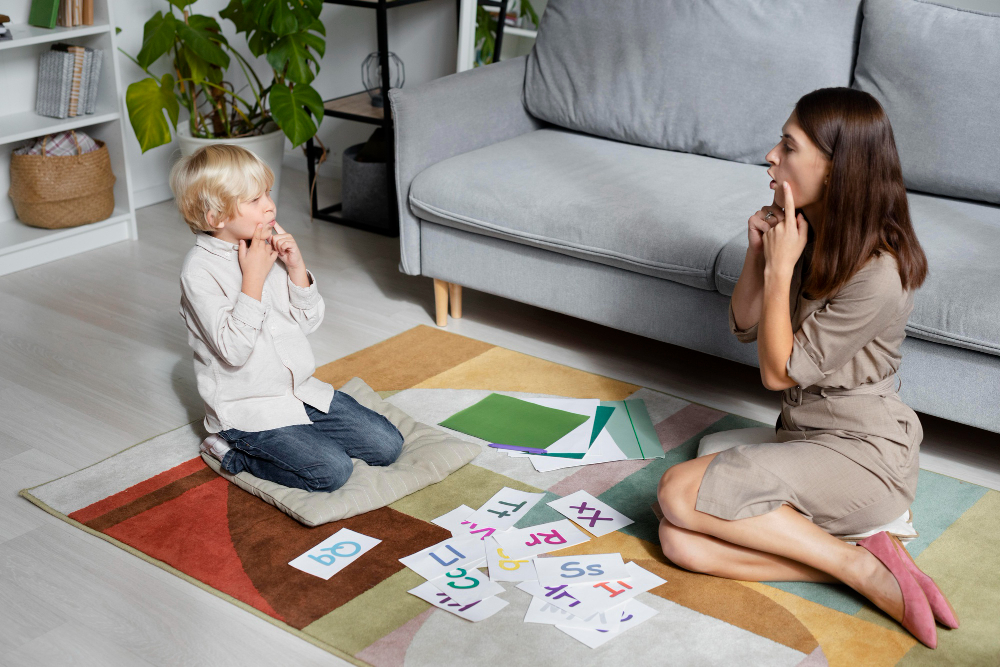
At 7 Senses Paediatric Rehabilitation Centre in Ahmedabad, our speech therapy team works with children from infancy through school age. We offer formal assessments, structured therapy sessions, and guidance for parents on home strategies. Sessions are adjusted based on each child’s communication profile.
Frequently Asked Questions
Q: What tools does a speech therapist use in the first session?
The first session is usually an assessment. The therapist will observe the child during play, use some structured activities, and may administer a formal language test.
Q: Is PECS suitable for all children with autism?
PECS works well for many non-verbal or minimally verbal children with autism, but it is not the right choice for everyone. A speech therapist will assess whether PECS or another AAC approach is most appropriate.
Q: At what age should I worry about speech delay?
If a child has no words by 12 months, fewer than 50 words by 18 to 24 months, or is not combining two words by 24 months, it is worth seeking a professional assessment.
Q: Can apps replace speech therapy?
No. Apps are useful supplements but cannot replace the clinical judgment, relationship-based learning, and dynamic adjustment that a qualified speech therapist provides.
Q: How often should a child attend speech therapy?
Most children benefit from one to two sessions per week, combined with daily practice at home.
Conclusion
Speech therapy tools are only as good as the hands using them. The right tool, used by a trained therapist who knows your child, combined with consistent practice at home, makes a genuine difference.
If you are looking for speech therapy for kids in Ahmedabad, start with a professional assessment. Contact 7 Senses Paediatric Rehabilitation Centre today.