

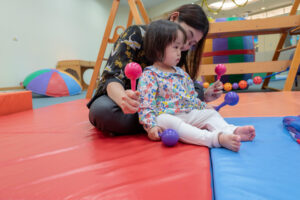




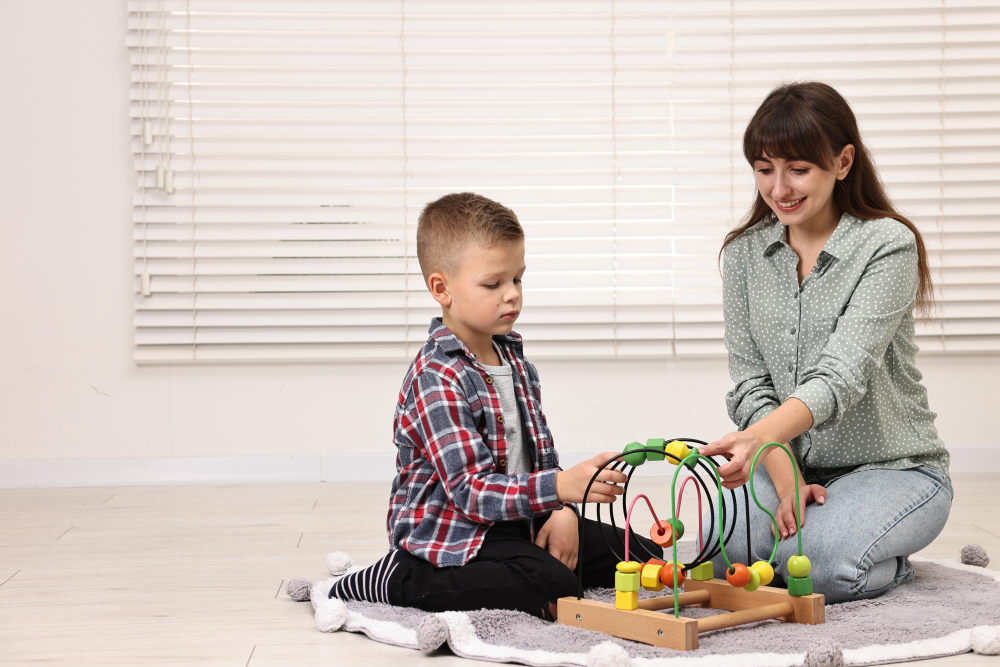
ABA therapy sessions at a centre happen once or twice a week. The rest of the time, the child is at home, at school, and in the community. What happens in those hours matters enormously for how quickly skills develop and how well they generalise to real life.
Parents do not need to become therapists to make a difference at home. What they need is an understanding of a few core ABA principles and how to apply them naturally in daily routines.
This guide is a practical companion to our full guide on ABA therapy in Ahmedabad, which covers how ABA works, what to look for in a provider, and what to expect from formal sessions.
Why Home Practice Matters in ABA
One of the core goals of ABA is generalisation, helping the child use skills across different people, environments, and situations, not just in the therapy room. A child who can ask for water with their therapist but not with their parent has not yet generalised that skill.
Parents are uniquely positioned to help with generalisation because they are with the child across multiple environments every day. When home practice is consistent and aligned with what the therapist is working on, progress speeds up significantly.
Core ABA Principles Parents Can Apply at Home
Follow the Child’s Motivation
In ABA, preferred items and activities are used as motivation to encourage communication and learning. At home, you already know what your child loves. Use those things.
If your child loves a particular toy, that toy becomes a teaching tool. Hold it up and wait for a request before giving it. If your child loves a particular food, use mealtimes as natural opportunities for communication practice.
The key is not to withhold things cruelly, but to create brief, natural moments where communication is required before a preferred item is provided.
Create Opportunities to Communicate
Children with autism or communication delays often have their needs anticipated before they have to ask. This removes the reason to communicate. Deliberately creating situations where the child needs to communicate is one of the most effective home strategies.
- Offer choices: Hold up two options and wait. “Do you want biscuit or apple?” Then wait at least 10 seconds before prompting.
- Sabotage routines: Forget to give a spoon with the cereal. Put shoes in a place the child cannot reach. Open a jar partially so the child needs to ask for help. These moments create natural communication demands.
- Pause during preferred activities: During a song or game the child enjoys, pause expectantly and wait for them to signal that they want it to continue.
Use Consistent Language
One of the reasons ABA works is consistency. If the therapist uses a specific prompt or phrase for a particular skill, use the same one at home. Ask your child’s therapist for the exact language they use so you can match it.
Consistency reduces confusion and helps the child generalise faster. It also means that when the skill emerges, it is clear and reliable rather than variable.
Prompt and Fade
When teaching a new skill, children often need prompts physical guidance, verbal cues, gestures, or visual supports. The goal is always to use the least amount of prompt needed, and to gradually reduce the prompt over time as the child becomes more independent.
At home, avoid jumping to the most helpful prompt immediately. Pause first. If the child does not respond, offer the least intrusive prompt (a gesture or a partial verbal cue) before providing more support.
Prompt dependency, where a child only performs a skill when prompted is one of the most common pitfalls in home practice. Your therapist can help you find the right prompt level for each skill.
Reinforce Immediately and Specifically
When a child does something you want to see more of, reinforce it immediately. The shorter the time between the behaviour and the reinforcement, the clearer the connection for the child.
Be specific. “Good job” is vague. “Great asking for juice!” tells the child exactly what they did well and makes it more likely they will do it again.
Find out from your therapist what reinforcers are most effective for your child. These change over time, and the therapist will be tracking what works best.
Keep Sessions Short and Positive
Formal home practice sessions do not need to be long. Ten to fifteen minutes of focused, positive practice is more effective than an hour of unfocused or frustrating effort.
End every session on a success. If the child is struggling with a particular skill, lower the demand temporarily so they can finish with something they can do well. This keeps the association with practice positive.
Embedding ABA Principles Into Daily Routines
The most sustainable home practice is not a separate session. It is weaving ABA principles into what already happens every day.
- Mealtimes: Use meals to practise requesting, labelling food items, and waiting turns. Ask the child to name what they want before giving it. Comment on what you are eating to model language.
- Getting dressed: Practise sequencing and following instructions. Use visual supports if needed. Let the child attempt steps independently before helping.
- Bath time: Name body parts, practise requesting more water or soap, and use the routine to practise following a sequence of steps.
- Play: Use the child’s play interests to practise turn-taking, joint attention, requesting, and commenting. Follow the child’s lead rather than directing the play.
- Community outings: Shops, parks, and transport all offer natural opportunities to practise skills in new environments, which is exactly what generalisation requires.
What to Communicate to Your Therapist
Your observations at home are valuable data. Share them at every session:
- Which skills are appearing at home that were previously only seen in sessions
- Which skills are not transferring from sessions to home
- Any new behaviours that have emerged, whether positive or challenging
- What reinforcers are working well and which have lost their appeal
- What routines are going smoothly and which are consistently difficult
Our parents training and home plans service at 7 Senses provides structured guidance so that home practice is aligned with what is happening in sessions, and so parents feel confident in what they are doing and why.
What to Avoid
- Avoid repeating prompts without a pause: If you ask the child to do something and they do not respond, wait at least 5 to 10 seconds before prompting. Repeating the instruction immediately reduces the child’s incentive to respond the first time.
- Avoid over-prompting: If you always guide the child physically through a task, they never have the chance to attempt it independently. Use the least support needed, not the most.
- Avoid making practice feel like a test: Home practice should feel natural and positive. If you are frustrated, take a break. Children are very sensitive to emotional tone.
- Avoid inconsistency between caregivers: If one parent always prompts and another never does, the child receives inconsistent signals. All caregivers should follow the same approach for key skills.
Frequently Asked Questions
Q: Do I need training to do ABA at home?
You do not need to be a trained therapist, but guidance from your child’s therapist is important. Without guidance, it is easy to inadvertently reinforce the wrong behaviours or use prompts incorrectly. Ask your therapist to show you exactly what to do and how.
Q: How is home ABA different from in-clinic ABA?
Clinic ABA is structured and delivered by a trained therapist in a controlled environment. Home ABA is less formal, it is primarily about generalising skills, creating natural communication opportunities, and maintaining consistent routines. Both are important and work best together.
Q: My child behaves very differently at home than in sessions. Is this normal?
Yes, this is very common, particularly early in therapy. The clinic environment is predictable and the therapist has established clear routines and reinforcement systems. Replicating some of that predictability at home, with consistent routines and clear expectations, helps bridge the gap.
Q: What if my child refuses to do home practice?
Do not force it. Ending practice on a negative note is counterproductive. Try shortening the session, switching to a preferred activity, or embedding the skill into a routine the child already enjoys. Tell your therapist, they may need to adjust the home programme.
Q: How do I know if the home strategies are working?
Look for the skill appearing spontaneously, without prompting, in contexts where it was not previously seen. Track progress informally and share your observations with the therapist at every session.
Conclusion
ABA therapy at home is not about replicating clinic sessions in the living room. It is about understanding a few core principles, applying them consistently in daily routines, and communicating closely with the therapist about what is happening between sessions.
Parents who are actively involved in their child’s ABA programme consistently see faster progress and better generalisation of skills. If you want structured support to get this right, contact 7 Senses in Ahmedabad.