

If your child has recently been diagnosed with autism, or if a developmental paediatrician has suggested ABA therapy, it is natural to have a lot of questions. What exactly is ABA? How does it work in practice? Is it the right approach for your child? And where do you even begin looking for ABA therapy in Ahmedabad?
This guide answers all of that. It is written for parents who are new to ABA as well as those who have heard about it but want to understand it properly before committing to a programme.
What Is ABA Therapy?
ABA stands for Applied Behaviour Analysis. It is a structured, evidence-based therapy that uses the science of learning and behaviour to improve meaningful skills and reduce behaviours that interfere with a child’s development and daily functioning.
ABA therapy is most commonly used with children on the autism spectrum, but it is also used for children with ADHD, developmental delays, and other behavioural challenges. It is not a single technique. It is a broad framework within which therapists use a variety of strategies tailored to the individual child.
The core principle is straightforward: behaviours that are reinforced tend to increase, and behaviours that are not reinforced tend to decrease. ABA therapists use this principle systematically to help children learn communication skills, social skills, self-care skills, academic skills, and appropriate behaviour in different settings.
How Does ABA Therapy Work in Practice?
ABA therapy begins with a detailed assessment. The therapist observes the child across different settings, gathers information from parents, and identifies the specific skills the child needs to develop. From this assessment, they create an individualised treatment plan with measurable goals.
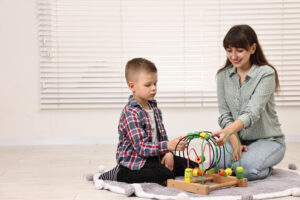
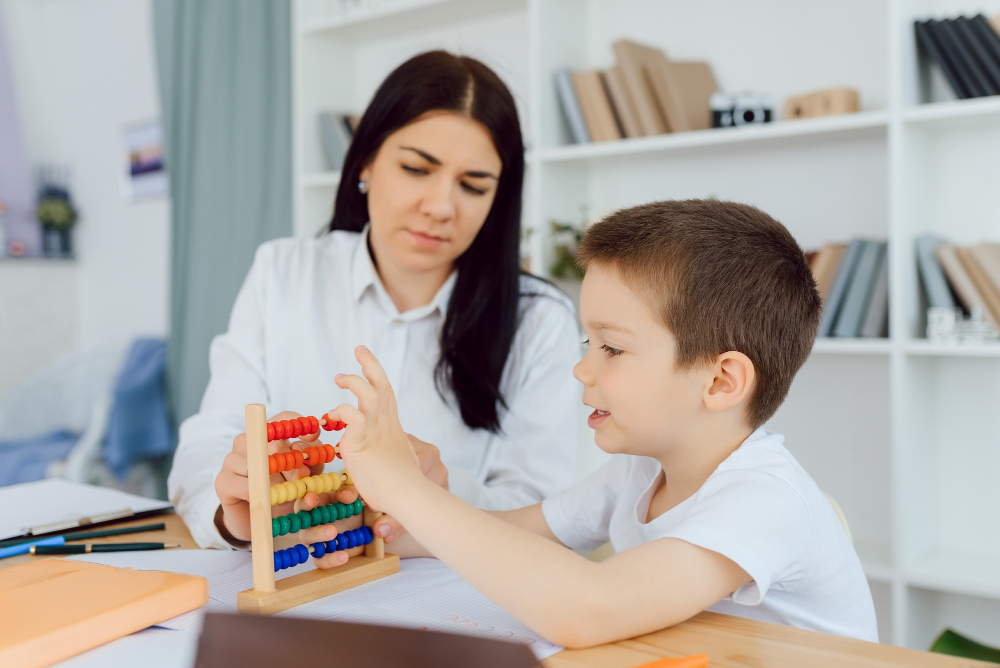
Sessions are structured but not rigid. Good ABA therapy follows the child’s interests and uses motivation as the engine of learning. A child who loves trains will practise communication through train play. A child who loves building blocks will develop turn-taking and sequencing through construction activities.
Key methods used within ABA include:
Discrete Trial Training (DTT): A structured teaching method where a skill is broken into small steps, each taught and reinforced separately. Used for skills like vocabulary, matching, and categorisation.
Natural Environment Teaching (NET): Teaching that happens within the child’s natural play and daily routines, rather than at a desk or table. Research shows skills learned this way generalise better to real life.
Verbal Behaviour (VB): A specific application of ABA focused on teaching communication as a functional behaviour. Children learn to request things they want, label what they see, and eventually engage in conversation.
Pivotal Response Treatment (PRT): Targets pivotal areas of development, such as motivation and self-management, with the idea that improving these core areas produces widespread improvements across other skills.
Social Skills Training: Teaches children to read social cues, initiate interaction, take turns, and engage in reciprocal conversation.
What Does an ABA Session Look Like?
A typical ABA session at a centre like 7 Senses lasts 45 to 60 minutes for younger children and may be longer for older children. Sessions are led by a trained behaviour therapist under the supervision of a Board Certified Behaviour Analyst (BCBA) or equivalent qualified professional.
The session will involve a mix of structured activities and natural play. The therapist tracks data throughout, recording how the child responds to each teaching opportunity. This data is reviewed regularly by the supervising clinician to assess progress and adjust the programme.
Parents are typically involved in at least part of every session. The goal is not just for the child to learn skills in the therapy room but for those skills to carry across to home, school, and community settings.
How Is ABA Different From Other Therapies?
ABA is often used alongside other therapies rather than instead of them. Here is how it relates to the other interventions commonly recommended for autistic children:
ABA vs occupational therapy: OT focuses on sensory processing, fine motor skills, and daily living skills. ABA focuses on behaviour, communication, and learning. The two complement each other very well.
ABA vs speech therapy: Speech therapy targets the production of speech sounds and language skills. ABA’s verbal behaviour component also addresses communication, but through a different theoretical lens. Many children benefit from both simultaneously.
ABA vs sensory integration therapy: Sensory integration therapy addresses how the nervous system processes sensory information. ABA does not directly target sensory processing. Children who have both behavioural and sensory needs often receive both therapies.
Our Core Development Programme integrates elements of ABA, OT, and speech therapy into a unified approach for children who need support across multiple developmental areas simultaneously.
How Much ABA Therapy Is Recommended?
Research, particularly the landmark work by Ivar Lovaas in the 1980s and subsequent studies, suggested that early intensive ABA (30 to 40 hours per week) produced the best outcomes for young autistic children. However, more recent research and clinical practice have moved toward individualised dosing.
What works best depends on the child’s age, the severity of their needs, family circumstances, and how many other therapies they are receiving. Many children make strong progress with 10 to 20 hours per week of ABA combined with speech therapy and OT.
The most important factor is not the number of hours but the quality of the programme, the skill of the therapist, and consistent implementation across the child’s environments, including at home.
Is ABA Therapy Right for Every Child With Autism?
ABA is the most researched intervention for autism. That does not mean it is right for every child in the same form. Modern ABA, when well-delivered, is child-led, positive, and compassionate. It should never feel punishing or coercive.
Signs that an ABA programme is well-delivered:
- The child appears willing and often eager to attend sessions
- Progress is documented and reviewed regularly
- Parents are trained and involved
- The programme targets meaningful real-life skills, not just test performance
- The child’s communication is supported, not suppressed
Signs that a programme may need review:
- The child is frequently distressed during sessions
- Goals are repetitive and not advancing
- Parents are not being kept informed of progress
- There is no flexibility to follow the child’s interests
If you are evaluating ABA providers in Ahmedabad, ask to observe a session before enrolling. A confident, well-run programme will welcome this.
How to Find the Best ABA Therapist in Ahmedabad
When looking for ABA therapy in Ahmedabad, here is what to look for:
Qualified supervision: The programme should be overseen by a BCBA or a psychologist or special educator trained in applied behaviour analysis. Ask specifically about the qualifications of the person designing the programme.
Individualised assessment: A good provider will not begin therapy without first assessing your child. Be wary of programmes that offer a generic package without individual planning.
Data-driven practice: Ask how the therapist tracks progress. Regular data collection and review is a defining feature of ABA, not an optional extra.
Parent involvement: The best ABA programmes train parents actively. If a provider suggests parents should simply drop their child and return later, that is a red flag.
Coordination with other therapists: If your child is also receiving OT or speech therapy, the ABA therapist should communicate with those professionals and work towards shared goals.
At 7 Senses Paediatric Rehabilitation Centre in Ahmedabad, our ABA programme combines all of these elements. We work with children from Satellite, Bodakdev, Prahlad Nagar, Makarba, and across Ahmedabad. Our team coordinates across disciplines so that every child’s programme is genuinely joined up.
Frequently Asked Questions
Q: At what age should ABA therapy start?
ABA is most effective when started early, ideally before age 5. However, older children and even teenagers benefit from ABA, particularly for social skills and adaptive behaviour goals.
Q: Does ABA therapy work for non-verbal children?
Yes. ABA, particularly the verbal behaviour approach, is specifically designed to build communication in children who are not yet speaking, including through AAC (Augmentative and Alternative Communication).
Q: How long will my child need ABA therapy?
This varies significantly. Some children reach their goals within 1 to 2 years. Others benefit from ongoing support through school age. Progress is reviewed regularly and the programme adjusts over time.
Q: Can ABA therapy be done at home?
Parent-implemented ABA strategies at home are a core part of good ABA programmes. The formal sessions with a trained therapist should happen in a centre or school setting, but home practice is equally important.
Q: Is ABA available online?
Some components of ABA parent training and supervision can be delivered online. For children, in-person sessions are generally more effective.
Q: Does ABA therapy cure autism?
No. Autism is not a disease to be cured. ABA helps autistic children develop skills and manage challenges so they can participate more fully in daily life. For more on this, read our blog at 7sensesprc.com/can-autism-go-away-with-age/.
Conclusion
ABA therapy in Ahmedabad is increasingly available, and awareness among Ahmedabad parents is growing. The key is finding a programme that is individualised, evidence-based, and genuinely built around your child’s needs and family circumstances.
If you are looking for ABA therapy for your child in Ahmedabad and want to understand what is right for them specifically, contact 7 Senses. We are happy to speak with you before you make any decision.