



Some children cover their ears at the sound of a hand dryer. Others refuse to wear socks with seams. Some crash into furniture constantly, spin obsessively, or cannot tolerate the texture of certain foods. These are not behaviour problems or bad habits. They are often signs of sensory processing disorder.
Sensory processing disorder (SPD) is a condition in which the brain has difficulty receiving and responding to sensory information. It is more common than many parents realise, and it significantly affects how a child functions at home, at school, and in social situations.
This guide explains what sensory processing disorder is, how to recognise it in children, what causes it, and how sensory integration therapy helps.
What Is Sensory Processing Disorder?
The human sensory system processes input from seven senses, not just the five most people learn about. Beyond sight, hearing, smell, taste, and touch, the sensory system also includes:
- Proprioception: The sense of where the body is in space, which comes from muscles, joints, and tendons. Children who seek intense physical input, crash into things, or press very hard when writing are often seeking proprioceptive feedback.
- Vestibular: The sense of movement and balance, processed in the inner ear. Children who are fearful of movement, or conversely who spin and rock constantly, often have vestibular processing differences.
In sensory processing disorder, the brain does not organise and interpret sensory input in the way it is supposed to. This can mean the child is oversensitive to input (sensory overresponsivity), undersensitive (sensory underresponsivity), or actively seeking specific types of input (sensory seeking).
SPD is not a formal diagnosis in the DSM-5, but it is widely recognised by occupational therapists, developmental paediatricians, and researchers, and it responds well to targeted intervention.
Signs of Sensory Processing Disorder in Children
SPD presents differently depending on which senses are affected and whether the child is over or underresponsive. Common signs include:
Signs of sensory overresponsivity
- Strong distress to unexpected touch, even light contact
- Refusal to wear certain clothing due to texture, tags, or seams
- Extreme reaction to everyday sounds such as hand dryers, blenders, or crowds
- Gagging or refusal of foods based on texture rather than taste
- Avoidance of messy play, sand, grass, or certain materials on hands and feet
- Distress in bright or flickering light
Signs of sensory underresponsivity
- Appears not to notice pain, heat, or cold that would distress most children
- Does not respond when called or touched
- Low energy, slow to respond, appears passive in play
- Does not notice when face or hands are dirty
Signs of sensory seeking
- Constantly touching objects and people
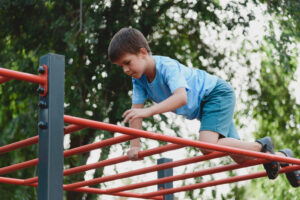
- Crashing into furniture, walls, or other people
- Excessive spinning, rocking, or jumping
- Mouthing objects beyond the age when this is typical
- Seeking very loud music or noise
If several of these signs are present and are affecting your child’s daily functioning, it is worth seeking a professional assessment. The signs of SPD often overlap with other conditions, and many children have both SPD and another diagnosis such as autism. Our article on the importance of early identification of sensory processing challenges explains why early assessment matters.
What Causes Sensory Processing Disorder?
The exact cause of SPD is not fully understood. Research points to neurological differences in how the brain integrates sensory information. Several factors appear to increase the likelihood:
- Prematurity: Babies born before 33 weeks have a significantly higher rate of sensory processing difficulties, likely because sensory system development is interrupted.
- Genetic factors: SPD appears to run in families. Studies of twins show a strong genetic component.
- Co-occurring conditions: SPD is very commonly seen alongside autism spectrum disorder, ADHD, anxiety disorders, and developmental coordination disorder. This does not mean one causes the other, but the overlap is significant. Our autism page covers the relationship between autism and sensory processing in more detail.
- Early environmental factors: Some research suggests that limited sensory experiences in early infancy may affect sensory system development, though this is not conclusively established.
How Sensory Integration Therapy Helps
Sensory integration therapy, developed by occupational therapist Dr A. Jean Ayres, is the primary evidence-supported treatment for sensory processing disorder. It is delivered by a trained occupational therapist in a specially equipped environment.
The therapy works by providing the child with carefully graded sensory experiences that challenge the nervous system to process input more effectively. Over time, the brain becomes better at organising sensory information, which reduces the child’s over or underresponsivity.
What a sensory integration therapy session looks like
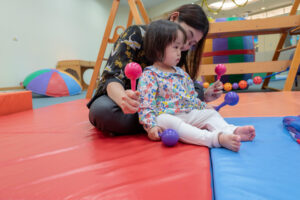
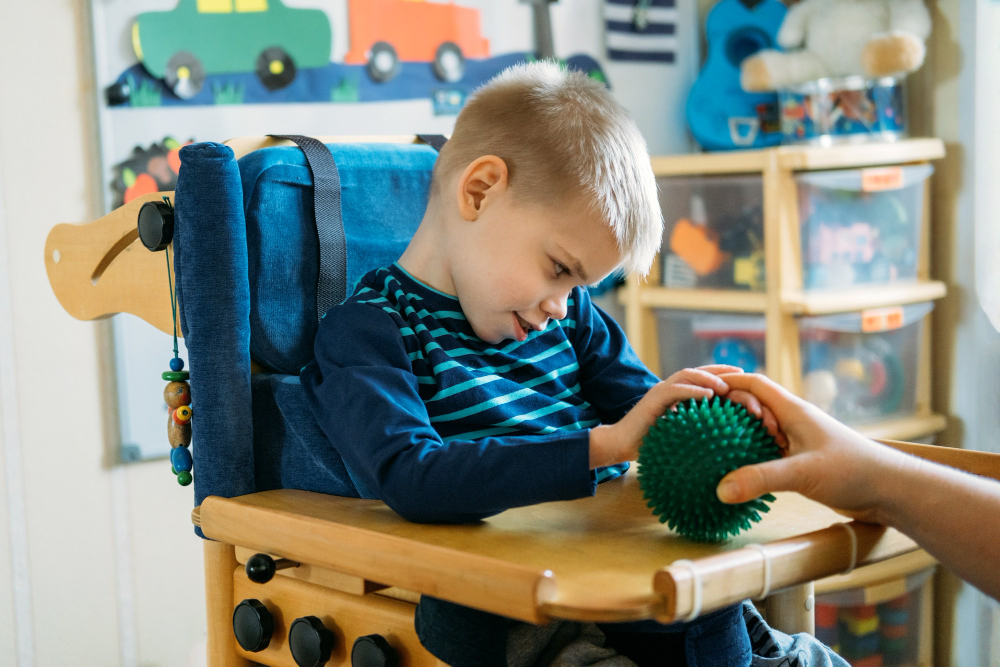
Sessions take place in a sensory room equipped with swings, crash pads, textured surfaces, tunnels, and other equipment. The child appears to be playing, but the activities are carefully selected and graded by the therapist to target specific sensory systems.
The child leads the play. The therapist follows the child’s natural drive for specific sensory experiences, “just right challenge”, and uses these moments to help the nervous system process input more adaptively.
Our sensory integration therapy programme in Ahmedabad uses this approach. For more on how sensory therapy supports everyday functioning, read our article on how sensory integration therapy supports daily skills in children.
What improves with sensory integration therapy
- Tolerance of clothing, textures, and touch
- Ability to manage noisy or busy environments
- Attention and self-regulation during learning activities
- Participation in meals with a wider range of food textures
- Reduced meltdowns triggered by sensory overload
- Physical confidence and body awareness
The Sensory Diet: Supporting Children at Home
A sensory diet is a personalised schedule of sensory activities spread through the day to help a child maintain a regulated state. It is not about food. It is about giving the nervous system the right type and amount of input at the right times.
A sensory diet is built by the occupational therapist based on the child’s specific sensory profile. It might include heavy work activities in the morning, a calming routine after school, and specific strategies for transitions or challenging moments.
For ideas on sensory activities families can do at home, our article on occupational therapy at home covers many practical strategies that also apply to sensory regulation.
Sensory Processing Disorder and School
The classroom is one of the most challenging environments for a child with SPD. It combines bright lighting, unpredictable noise, close proximity to other children, different textures in art and food activities, and constant transitions.
Children with unidentified SPD are often labelled as difficult, inattentive, or oversensitive. Once SPD is identified and the school understands the child’s sensory needs, simple environmental adjustments make an enormous difference: seating away from busy areas, ear defenders during noisy activities, sensory breaks during the day.
Therapists at 7 Senses communicate with schools where needed to help teachers understand a child’s sensory profile and implement practical accommodations.
Frequently Asked Questions
Q: Is sensory processing disorder the same as autism?
No. SPD and autism are different conditions, though they very frequently co-occur. Many autistic children have significant sensory processing differences, but many children with SPD do not have autism. Both conditions require individual assessment.
Q: At what age can sensory processing disorder be identified?
Signs can be present from infancy, though they often become more apparent when children enter structured environments like nursery or school. Assessment can happen at any age, but earlier identification allows for earlier support.
Q: How long does sensory integration therapy take to show results?
Most families notice meaningful changes within 3 to 6 months of consistent weekly therapy combined with a home sensory diet. Some children respond faster; others with more complex profiles need longer.
Q: Can sensory processing disorder improve without therapy?
Some children develop compensatory strategies over time. But without targeted therapy, many children with SPD continue to struggle with the same challenges into adolescence and adulthood. Early intervention produces significantly better outcomes.
Q: Does every child with sensory sensitivities have SPD?
Not necessarily. Some degree of sensory preference is normal in all children. SPD is characterised by sensory responses that are significantly different from typical and that consistently affect the child’s functioning across multiple settings. An assessment by a trained occupational therapist will clarify this.
Conclusion
Sensory processing disorder affects how a child experiences and responds to the world around them. With the right assessment and targeted therapy, most children with SPD make meaningful progress in their ability to manage sensory input and participate in daily life.
If you have concerns about your child’s sensory responses, contact 7 Senses in Ahmedabad for a professional assessment.