

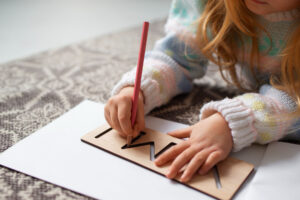


Your child’s teacher has written “work on handwriting” in the diary again. The letters are uneven, words run into each other, and homework takes far longer than it should. So you start searching for handwriting classes in Ahmedabad.
For many children, a good handwriting class is exactly what they need. But for some, messy writing is not a practice problem at all. It comes from weak hand muscles, a poor pencil grip, unsteady posture or difficulty coordinating what the eyes see with what the hand does. Extra worksheets will not fix those, and the child may simply become more frustrated.
This guide explains the difference between handwriting classes and handwriting therapy, the signs that point to one or the other, and how to decide what is right for your child.
What Handwriting Classes Do
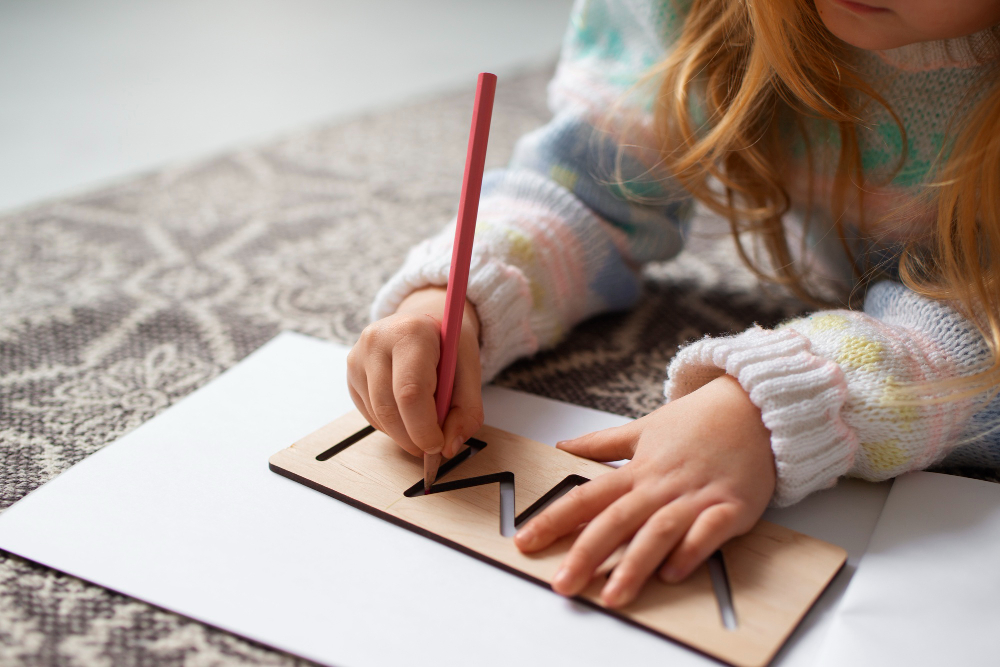
Handwriting classes teach children how to form letters neatly and consistently. They usually focus on letter shapes, spacing, cursive or print style, speed and regular practice. The approach is similar to a tuition class: the child copies models, repeats them and improves with practice.
Handwriting classes work well for children who:
- Hold the pencil comfortably and can write for 10 to 15 minutes without tiring
- Know their letters but write them inconsistently
- Write untidily mainly because they rush
- Want to learn cursive or improve speed for exams
- Improve steadily when they practise
If this describes your child, a class may be all they need.
What Handwriting Therapy Does
Handwriting therapy is led by a paediatric occupational therapist. Instead of starting with the letters, it starts with the skills that make writing possible. The therapist first works out why writing is difficult for your child, then builds those underlying skills.
These skills include:
- Fine motor strength: the small muscles of the hand and fingers that control the pencil
- Pencil grip: a grip that is comfortable and does not tire the hand quickly
- Posture and core stability: sitting steadily so the arm and hand are free to move. Our guide to building core strength in children explains why this matters so much at the desk.
- Visual-motor integration: copying accurately what the eyes see, for example from the board
- Motor planning: remembering and sequencing the movements needed to form each letter
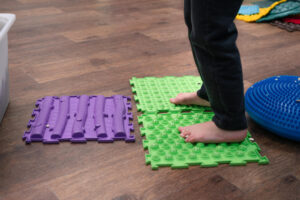
- Sensory processing: knowing how much pressure to use, and staying settled and focused while writing
Once these foundations improve, letter formation and neatness usually become much easier to work on. That is the key difference: a class trains the output, while therapy builds the skills underneath it.
Signs Your Child Needs More Than Practice
If your child shows several of these signs, an occupational therapy assessment is a better first step than a class:
- Holds the pencil with a fist, very tightly, or with an unusual grip
- Complains that the hand hurts or feels tired after a few lines
- Presses so hard the paper tears, or so lightly the writing is faint
- Has trouble copying from the board and makes many mistakes
- Still reverses letters such as b and d after age 7
- Slumps, leans on the desk or keeps shifting while writing
- Avoids colouring, cutting, drawing or puzzles
- Struggles with other fine motor tasks such as buttons, shoelaces or eating neatly with a spoon
- Writing has not improved despite months of classes or practice
- Becomes upset, refuses homework or says “I’m bad at writing”
None of these signs alone means something is wrong, because children develop at different speeds. But when several appear together, the cause is usually a skill gap that practice alone will not close. If you are noticing difficulties beyond writing too, these signs your child may need paediatric occupational therapy can help you see the bigger picture.
Handwriting Classes vs Handwriting Therapy at a Glance
| Handwriting classes | Handwriting therapy | |
|---|---|---|
| Led by | Handwriting teacher or tutor | Paediatric occupational therapist |
| Starts with | Letter shapes and copying practice | An assessment of why writing is hard |
| Works on | Neatness, letter style, spacing, speed | Hand strength, grip, posture, visual-motor skills, motor planning |
| Best for | Children who write untidily but have no underlying difficulty | Children with grip, strength, coordination or attention difficulties |
| Sessions | Usually in a group | Usually one-to-one |
| Progress measured by | Neater writing | Improvement in the underlying skills, then in writing |
The two are not rivals. Some children start with therapy to build the foundation, then move on to classes for style and speed.
How Handwriting Skills Training Works at 7 Senses
At 7 Senses Paediatric Rehabilitation Centre in Ahmedabad, our handwriting skills training is delivered by the same team that provides paediatric occupational therapy, so your child’s writing is never looked at in isolation. Here is what to expect:
- Assessment: our occupational therapist watches your child write, draw and do fine motor tasks, and checks grip, posture and visual-motor skills. If you are curious about this first visit, read what happens in your child’s first occupational therapy session.
- A personalised plan: based on the assessment, we set clear goals, for example a comfortable grip or copying accurately from the board.
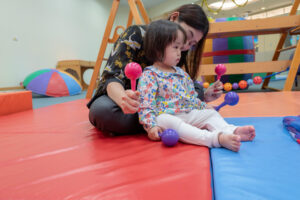
- Play-based sessions: children build strength and control through putty, pegboards, tongs, mazes and tracing, before moving on to letter formation.
- Home activities: we give parents simple activities to continue at home, so progress carries over into school work.
- Regular reviews: we track your child’s progress and update the plan with you.
When copying from the board is the main struggle, the therapist may also suggest visual rehabilitation to work on visual skills. And if writing difficulties come alongside wider learning challenges, our special education team can support your child in the classroom skills that follow.
Simple Ways to Support Handwriting at Home
Whatever you choose, these everyday activities help build the skills behind good handwriting:
- Play with dough or clay: rolling, pinching and squeezing strengthen the hand muscles.
- Pick up small objects: use tongs, clothes pegs or tweezers to move rajma, beads or buttons from one bowl to another.
- Draw on a vertical surface: writing on a wall-mounted board or paper taped to the wall improves wrist position and shoulder stability.
- Use short pencils or broken crayons: a short pencil naturally encourages a finger grip instead of a fist.
- Check the seating: feet flat on the floor or a small stool, and the table at elbow height.
- Keep it short and positive: 10 minutes of relaxed practice is better than an hour of struggle.
For more ideas, browse our list of occupational therapy activities for children you can do with everyday household items. If these activities feel like a battle, or your child avoids them completely, that itself is useful information to share with a therapist.
Frequently Asked Questions
At what age should I worry about my child’s handwriting?
Most children hold a pencil with a mature grip and form letters reasonably well by around 6 to 7 years. If your child is older than this and writing is still a daily struggle, an assessment is worth considering. You do not need to wait for the school to raise it.
Is poor handwriting a sign of a learning disability?
Not necessarily. Many children with messy handwriting simply need more practice or stronger motor skills. Sometimes, though, ongoing difficulty with writing is linked to dysgraphia, coordination difficulties or attention difficulties. An assessment helps you understand the cause instead of guessing.
Can handwriting therapy be done online?
Some parts, such as guided home activities and progress reviews, can work through our online consultation service, which is helpful for families outside Ahmedabad. A first assessment is best done in person so the therapist can closely observe grip and posture.
How long does handwriting therapy take?
It depends on your child’s needs and how regularly they attend and practise at home. Your therapist will set goals after the assessment and review progress with you regularly.
My child already attends a handwriting class. Should we stop?
Not necessarily. If the class is helping, continue. If it is not, an occupational therapy assessment can show what is holding your child back, and the two can work together.
Not Sure Which Your Child Needs?
Book a handwriting and fine motor assessment at 7 Senses to understand whether they would benefit from practice, therapy, or a combination of both.
Call or WhatsApp us at +91 73831 33255, or Book an Assessment Today.