


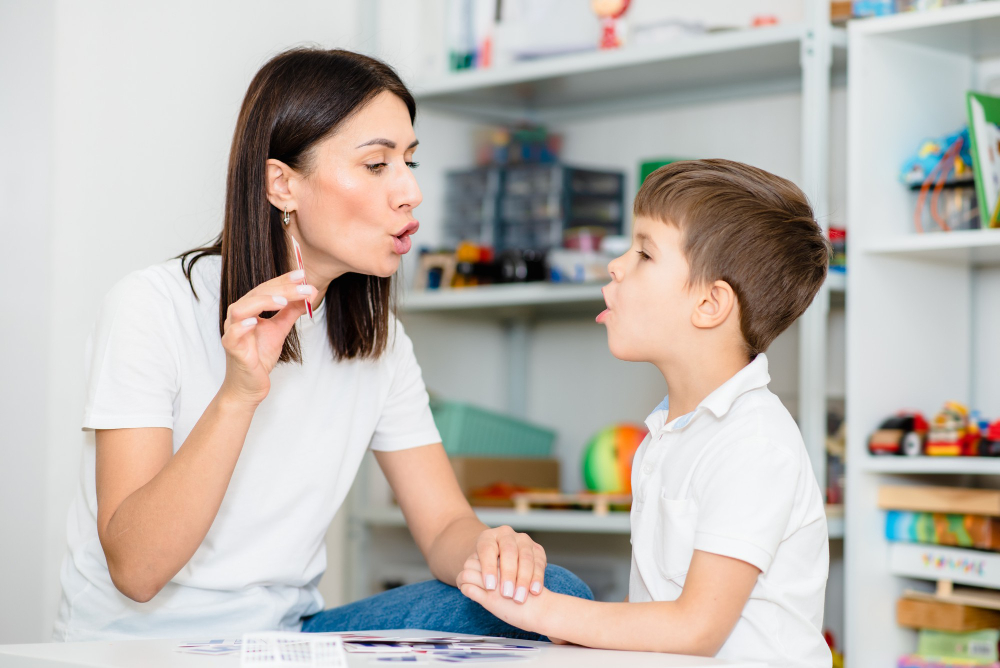
When a toddler is not talking as expected, the most common advice parents hear is “wait and see.” Sometimes that advice is reasonable. But often, the time spent waiting is time that could be spent getting early support, which makes a real difference to outcomes.
This guide is for parents trying to understand speech delay in children: what it is, what causes it, when to be concerned, and what speech delay treatment actually involves.
What Is Speech Delay?
Speech delay means a child’s spoken language is developing more slowly than expected for their age. It is one of the most common developmental concerns parents bring to paediatricians and therapists.
Speech delay refers specifically to difficulties with producing sounds and words, the motor act of speaking.
Language delay refers to difficulties with understanding and using language, the content and meaning of communication.
A child can have one without the other, or both together.
Speech Delay in Toddlers: What Is Normal and What Is Not

Most children follow a fairly predictable developmental timeline for speech and language. These are approximate markers, not strict deadlines:
Age | Expected Milestone
12 months | Uses a few words (mama, dada, ba)
18 months | Uses 10 to 20 single words
24 months | Combines two words (more milk, daddy go)
3 years | Speaks in 3 to 4 word sentences, understood by strangers
4 years | Tells simple stories, most sounds correct
Signs of speech delay in toddlers that should prompt assessment:
- No babbling by 12 months
- No single words by 16 months
- No two-word combinations by 24 months
- Loss of previously acquired language at any age
- Not responding to their name by 12 months
- Difficulty understanding simple instructions by 18 months
What Causes Speech Delay in Children?

Hearing loss
The most important thing to rule out first. Children learn to speak by hearing speech. If they cannot hear well, language development is affected. A hearing assessment should be part of any speech delay evaluation.
Oral motor difficulties
Some children have low muscle tone in the tongue, lips, or jaw that makes producing sounds physically difficult.
Autism spectrum disorder
Communication difficulties are one of the core features of autism. Speech delay is frequently the first sign that leads to an autism evaluation.
Intellectual disability
Global developmental delays affect language along with other areas.
Expressive-only delays
Some children have no identified diagnosis. They simply develop expressive language more slowly than peers. These children often make rapid progress with speech therapy.
Bilingual environment
Children raised in bilingual households sometimes take slightly longer to reach milestones in either language. They should not be diagnosed with speech delay on this basis without careful assessment.
Speech Delay Treatment: What Works
Speech therapy, the foundation
Speech therapy is the primary and most effective treatment for speech delay in children. A qualified speech-language pathologist (SLP) assesses the child, identifies the specific areas of difficulty, and builds an intervention plan.
What happens in speech therapy for speech delay depends on the child’s profile. For toddlers with limited words, therapy may focus on expanding vocabulary through play-based interaction. For children with sound errors, it targets articulation. For children with autism, it may incorporate AAC or social communication approaches.
How often? Most children with speech delay benefit from one to two sessions per week plus daily home practice.
Speech therapy for speech delay in toddlers
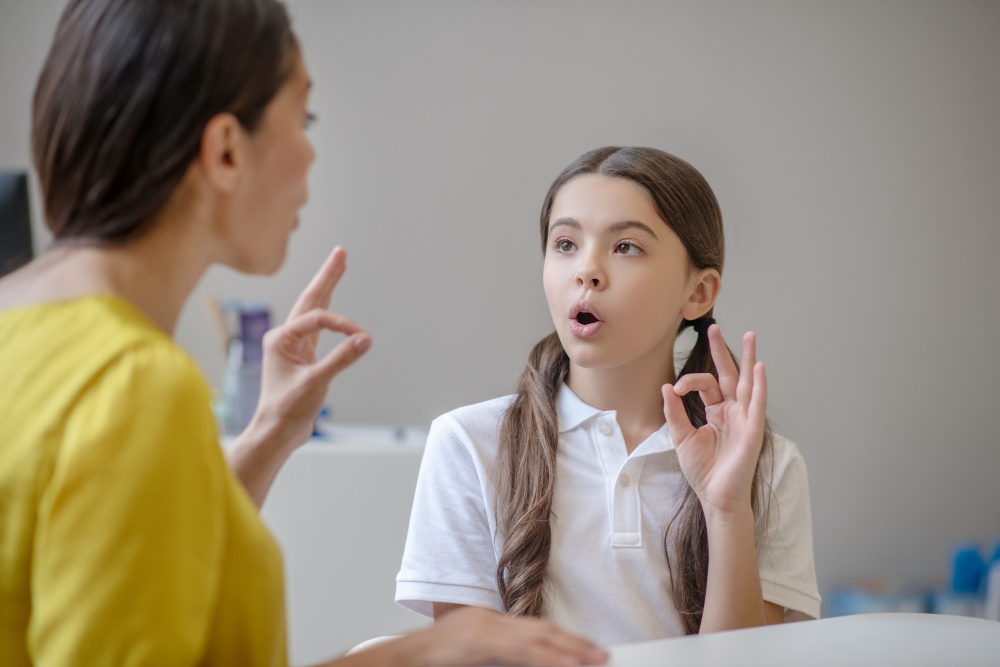
For very young children (under 3), therapy is almost entirely play-based. The therapist follows the child’s lead, models language during play, and uses techniques like:
Recasting: When a child says something incorrectly, the therapist repeats it correctly without correcting the child directly. Child says “dat dog”, therapist says “yes, that’s a dog.”
Expansion: Taking what the child says and adding one more word. Child says “dog”, therapist says “big dog” or “dog running.”
Parallel talk: Describing what the child is doing as it happens. “You are pouring the water. It is going in the cup.”
These techniques work because they increase the quality of language input without placing demands on the child to produce language.
Parent coaching
For toddlers especially, parent coaching is often as important as direct therapy. Our parents training and home plans is designed for exactly this purpose.
AAC for children who are minimally verbal
For children who are not yet speaking, Augmentative and Alternative Communication (AAC) gives them a way to communicate while they develop spoken language.
Speech Delay Treatment at Home: What Parents Can Do
Talk constantly
Narrate what you are doing throughout the day. “I am cutting the onion. It smells strong. Now I am putting it in the pot.” This is exactly the rich language input your child needs.
Reduce screen time
Passive screen time does not support language development. Language is learned in interaction, not observation.
Read together every day
Even 10 minutes of shared book reading, where you point at pictures and talk about what you see, builds vocabulary and comprehension.
Respond to all communication attempts
When your child points, reaches, vocalises, or uses any form of communication, respond. This teaches them that communication works, which motivates more of it.
Do not demand speech
Asking “say cup” before giving a child a drink puts them under pressure and rarely leads to spontaneous language. Instead, offer choices and pause expectantly: “Do you want water… or juice?”, then wait.
Speech Therapy in Ahmedabad

If you are concerned about your child’s speech development and you are in Ahmedabad, do not wait too long to get an assessment. Early intervention consistently produces better outcomes than delayed intervention.
At 7 Senses Paediatric Rehabilitation Centre, our speech therapists assess children from infancy and have experience with a wide range of presentations, from mild expressive delays to complex communication needs associated with autism, cerebral palsy, and hearing loss.
Frequently Asked Questions
Q: Is speech delay the same as autism?
No. Speech delay can occur in children without autism, and not all autistic children have significant speech delay. But speech delay is common in autism, which is why it often leads to an autism evaluation.
Q: Will my child grow out of speech delay without treatment?
Some children do catch up without treatment. But waiting to find out means losing months that could be spent in early intervention.
Q: Can bilingualism cause speech delay?
Bilingual children may reach milestones in individual languages slightly later than monolingual peers, but they should not be significantly delayed when both languages are considered together.
Q: What is the difference between speech delay and speech disorder?
A speech delay means a child is following the normal pattern of development, just more slowly. A speech disorder means the pattern itself is atypical.
Q: How effective is speech therapy for toddlers?
Very effective when started early. Studies consistently show that children who receive speech therapy before age 3 make significantly better long-term progress than those who begin later.
Conclusion
Speech delay in children is common, and with the right support, most children make meaningful progress. The key is not to wait too long. An assessment gives you real information about what is happening and what to do about it. Contact us to get started.