


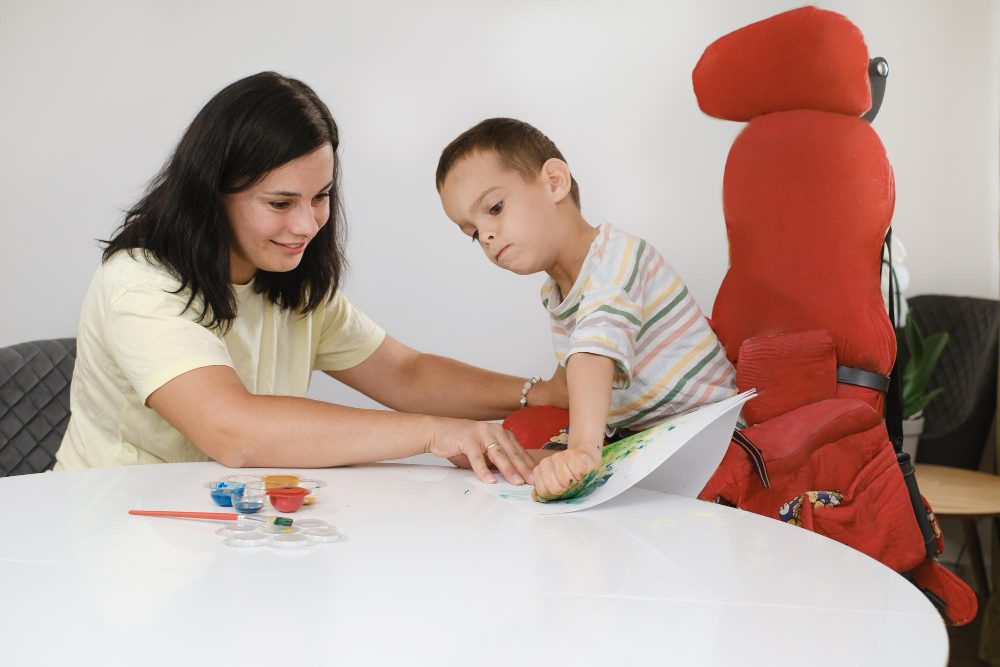
When a child is struggling at school and the standard classroom approach is simply not working for them, parents often hear the words “special education” for the first time. It can feel uncertain, particularly when you are not sure what it means or what it actually involves in practice.
This guide explains what special education is, which children it is for, what a special educator does, and how it connects with other therapies a child may already be receiving.
What Is Special Education?
Special education refers to tailored teaching approaches designed for children whose learning needs cannot be fully met through standard classroom instruction alone. It is sometimes called special needs education or inclusive education support.
It is not a separate system meant to isolate children. It is a set of individualised strategies and adapted teaching methods that help children with different learning profiles access curriculum content, build foundational academic skills, and participate meaningfully in educational settings.
In India, special education is guided by the Rights of Persons with Disabilities (RPWD) Act 2016, which mandates inclusive education for children with disabilities and requires schools to make reasonable accommodations.
Which Children Benefit From Special Education?
Special education is relevant for children with a wide range of conditions and learning differences:
- Autism spectrum disorder: Many autistic children need adapted teaching methods, visual supports, structured routines, and a different pace of instruction. Autism affects children differently, which means the educational approach needs to be individually designed rather than applied generically.
- Intellectual disability: Children who learn at a slower pace and need curriculum modification and additional practice to consolidate skills.
- ADHD and attention difficulties: Children who struggle to sustain attention, follow multi-step instructions, or manage impulsivity in a classroom setting.
- Dyslexia: Children whose primary challenge is decoding written language, despite normal intelligence and adequate teaching.
- Dyscalculia: Specific difficulty with numeracy and mathematical concepts.
- Developmental language disorder: Children who struggle to understand and use spoken language, affecting their ability to follow classroom instructions and engage in group discussions.
- Speech and language delays: Children whose communication difficulties affect classroom participation and academic progress.
- Cerebral palsy and physical disabilities: Children who may need adapted materials, positioning support, and modified tasks to access the curriculum.
- Down syndrome: Children who typically need modified curriculum pacing and concrete, multi-sensory teaching.
- Sensory processing difficulties: Children who are frequently dysregulated in classroom environments. Sensory integration therapy addresses the underlying sensory needs, and this often needs to run alongside the educational support.
What Does a Special Educator Do?
A special educator is a trained professional, typically holding a B.Ed (Special Education) or an equivalent qualification from the Rehabilitation Council of India (RCI). They design and deliver adapted educational support for children with learning differences.
In a rehabilitation setting, the special educator works alongside other therapists as part of a team. Their work covers several areas:
- Individualised Education Plan (IEP): Setting specific, measurable learning goals appropriate for the child’s current level and reviewing them at regular intervals.
- Academic skill building: Working on reading, writing, numeracy, and pre-academic skills using methods adapted to the child’s learning style. For children with autism or intellectual disability, this typically means highly structured, step-by-step teaching with repetition and positive reinforcement.
- Functional literacy and numeracy: For children who may not reach grade-level academic skills, the focus shifts to practical skills such as reading common signs, counting money, and understanding time.
- Curriculum adaptation: Helping schools understand how to modify their approach for a specific child — reducing written demands, using visual supports, or providing extra time.
- Social and behavioural support: Many children with learning differences also face social or behavioural challenges in classroom settings. The special educator addresses these as they directly affect learning.
How Special Education Works Alongside Other Therapies
Special education works best as part of a broader plan that includes therapeutic support for the underlying difficulties affecting learning. Depending on the child’s profile, this may include:
- Occupational therapy: Occupational therapy addresses the fine motor, sensory, and processing skills that underpin a child’s ability to engage with learning. A child who cannot tolerate sitting at a desk, or who has a poor pencil grip, needs this support before academic targets become realistic.
- Handwriting training: Handwriting skills training targets the specific mechanics of written output separately from academic content, which is particularly relevant for children with dysgraphia or motor difficulties.
- Speech therapy: Speech therapy addresses the language processing weaknesses that affect reading comprehension, following instructions, and academic participation.
- ABA therapy: ABA therapy strategies support children with autism or significant behavioural challenges in educational settings, helping them engage with learning more consistently.
- Home programme: A parents training and home plans programme ensures educational strategies continue at home, which significantly accelerates progress.
Special Education in Ahmedabad: What Parents Should Know
Awareness of special education needs is growing among Ahmedabad families. More parents are seeking assessments earlier, and more schools are developing inclusive education policies. However, access to qualified special educators with experience in autism and complex developmental profiles remains limited in many areas of the city.
Private rehabilitation centres fill an important gap here. They provide intensive one-to-one and small group educational support that many children need but cannot access through mainstream school alone.
The key is not to wait for the school to flag the problem. Schools are often slow to identify learning difficulties, particularly in children who are managing to pass assessments despite struggling significantly. If you have concerns as a parent, seeking an independent assessment is the right move.
Practical Steps for Parents
- Get an assessment first: Before deciding on any intervention, understand exactly what the child’s specific learning profile looks like. A multidisciplinary assessment that covers cognition, language, attention, and sensory processing gives a far clearer picture than a school report.
- Ask the school about accommodations: Under the RPWD Act 2016, schools are required to make reasonable adjustments for children with disabilities. Ask specifically what they can offer and put it in writing.
- Involve the school in the plan: Progress is fastest when the therapy centre and school are working from the same goals. With parental permission, therapists can communicate directly with teachers.
- Do not rely on tuition alone: Standard tuition repeats the same content in the same way. Special education adapts how the content is taught. If extra tuition has not produced results, special education assessment is the logical next step.
Frequently Asked Questions
Q: Does my child need a formal diagnosis to access special education support?
At a rehabilitation centre, no formal diagnosis is required to start. The assessment itself identifies the child’s needs. Formal diagnoses become important when seeking government support or school-level accommodations under the RPWD Act.
Q: Can a child attend special education sessions alongside regular school?
Yes, and this is the most common arrangement. Children attend regular school and come to the centre for sessions outside school hours.
Q: How is progress measured?
Through the IEP. Goals are broken into small steps and reviewed every 3 to 6 months. Parents are part of every review.
Q: What qualifications should a special educator have?
In India, special educators in clinical settings should hold an RCI-registered qualification, typically a B.Ed (Special Education) with a relevant specialisation such as autism, intellectual disability, or hearing impairment.
Q: How is special education different from regular private tuition?
Private tuition repeats the same content using the same teaching methods. Special education adapts the approach itself to match how a specific child learns, targets the underlying processing difficulties, and tracks progress against individual goals.
Conclusion
Special education in Ahmedabad gives children whose learning needs go beyond what a standard classroom can address a structured, individual path forward. It works best when it is part of a broader plan that includes therapeutic support alongside academic skill building.
If you think your child might benefit from a special education assessment, get in touch with 7 Senses in Ahmedabad.